Tuesday, November 24, 2009

Education In Wallpaper

Windows Background Wallpaper Registry Settings - Tweak Windows Background Wallpaper With Registry :


Windows scenery cover registry settings enables users not meet to change the cover itself but users can also choose to limit or allow the change of wallpapers. Such a feature haw be applicable for companies who do not poverty their employees or open users to add the cover of their desktop PCs or laptops. On the other hand, if you encounter that you are not healthy to change the cover of your personal computer, you haw poverty to countenance at the registry settings to see if the change of cover has been restricted and thus change it. Let's countenance at how to add Windows scenery cover registry settings.

Let's countenance at how you can limit or enable the change cover feature. You will requirement to prepare a registry file with the following content:

Windows Registry Editor Version 5.00
(blank line)
[HKEY_LOCAL_MACHINE/SOFTWARE/Microsoft/Windows/policies/ActiveDesktop] (please replace the forward slashes with backslash)
\"NoChangingWallPaper\"=dword:00000001

Save the file as \"XXXX.reg\" and double click on it. Select Yes when prompted and the Windows scenery cover registry setting should hit been applied. However, if your PC is affected by a group policy which haw be the case for company desktops, then this method haw not work.

If you would like to change the cover using registry, go to Start --> Run and type in regedit. Go to folder HKEY_CURRENT_USERControl PanelDesktop and countenance for Wallpaper, double click on it and change the line to point to your desired wallpaper.

If the above steps to tweak Windows scenery cover registry settings are meet too much hassle for you, you can download a free tool known as Tweak UI (Just do a search on Google). This freeware not only allow you to play with Windows scenery cover registry settings, but also other aspect of Windows UI much as the taskbar. Users of slower computers can use it to improve action of Windows by motion soured fanciful illustration features on the operating system.

George Tho is an IT support specialist. Read his review on the top 3 Registry Cleaners that come with free scanning features for you to improve action of Windows on your system and remove errors caused by registry.


Article Source: http://EzineArticles.com/?expert=George_Tho

Thursday, November 12, 2009

Austism In Chirlden


Autism causes problems with behaviour, communication and social skills. People with the disorder may have abnormalities in the way the brain developed that causes the behavioural quirks associated with it. But there are some people who believe it should not be classified as a mental disorder, arguing that autistic people are simply at the extreme end of a behavioural scale.

An autistic child usually starts exhibiting symptoms before the age of three, although the parent may only realise this with retrospect. A child with autism can be almost robotic in their behaviour. They will not interact in a normal manner with their parents - for instance, if they fall over they may not seek comfort - and they are likely to have very poor eye contact. If the autism is quite severe it may seem like they are almost unaware of the world around them. The child might react in a surprising manner to a seemingly innocent trigger, for instance many children with autism are very sensitive about people touching them. Sometimes they will spend long periods of time repeating certain motions over and over again, such as rocking or even a form of self harm.

The child will lack empathy with those around them. They cannot comprehend the feelings of other people and have no apparent interest in seeking out company. Their speech development is likely to be poor as a result. Not only will an autistic child not play with their peers, they may not even play on their own, or at least not in a manner which most people would define as play. Instead they tend to become rather fixated on specific things, for instance they may become singularly interested in trains, and obsessed with carrying out routines.

Autism is extremely difficult to treat as the condition is so complex and very little is known about its causes. Behavioural therapy can have a degree of success, but it is very dependent on the individual and the degree of their autism. Therapy can help them understand the behaviour and emotions of those around them, so that they can interact in a more normal manner. Apparently small actions can actually be a huge step for the child, such as spontaneously reaching out to their parents for a hug.

Raising a child with autism has its rewards, but it can also be a big emotional challenge. There are organisations available who will offer much needed support to the families of autistic children.

http://ezinearticles.com/?Autism-in-Children&id=3183027

Friday, October 23, 2009

Co-relation Between Autism and Social Education

autistic child needs more lovesAutism is not curse


autism go a headautistic child needs more loves


secure autism
Co-relation Between Autism and Social Education

Scientist are uncovering more and more support for attractive an relationship-based approach to autism treatment. The following section explains why. Included are easy techniques you crapper begin directly to encourage the ethnic utilization of your female with autism.

The Science

Earlier theories saw autism as a state disorder and so attempted to treat it through state modification, i.e. attempting to reinforce non-autistic behaviors and punish autistic behaviors to stamp-out the symptoms of autism. This view grew in the 1950s (soon after autism and Asperger’s syndrome were prototypal outlined) when the way in science was for behaviorism; a philosophy stating that only some organisms state was worth studying and power should spend no instance work thoughts, opinion or conscious undergo to understand human beings. Much work in the behaviorist camp was finished with animal training. It is from this scientific scenery that behaviorist treatments for autism arouse (e.g. ABA and various forms of the example therapy proposed by Ivan Lovaas).

Fortunately science has moved on and realized the pivotal importance of studying thoughts, opinion and the conscious undergo in understanding human beings. From this more modern and holistic approach to science has emerged a new understanding of autism. One of autism as a challenge in creating basic relationships. There is now much research display that children with autism crapper be seen to be different to their typically developing peers as early as 6 months of age (often only in remember at this stage but researchers are working on ways to identify autism earlier than the usual 2.5-3 years).

Children with autism (or those who will be later diagnosed with autism) do not socially determine in the usual way. This means they do not pay as much tending as added children do to ethnic stimuli, much as an adult calling their name or making receptor contact with them. This is a very basic ethnic function that typically developing children master in their prototypal few months. Children who are suspended in developing the skill of ethnic orienting are not acquisition to impact ethnic stimuli normally and are then suspended in developing the skills of render tending (paying tending to the same state or topic as added person) and shared affect (sharing emotional experiences with others). Over the prototypal eld of a child’s utilization these are pivotal steps and lay the foundation for all future ethnic and language learning. Without the ability of render tending digit crapper not hit a conversation or even endeavor a ultimate tickle game for very long.

Similarly this female crapper not begin to verify added person’s appearance and imagine what added mortal strength be thinking or opinion (developing a Theory of Mind) which is vital for participating in fluid ethnic exchanges. Without these skills the female with autism is floundering in the ever-changing ethnic field and instead focuses on things his brain is wired to grasp more easily - objects and mechanical (non-dynamic) systems.

It is not yet clear why children who amend autism respond to ethnic stimuli in this way. Some psychologists hit suggested that it haw be because ethnic stimuli are inherently complex, varied and dynamic or that the brain is wired in a way that is less healthy to impact (or filter) ethnic stimuli as opposed to more fixed, non-dynamic non-social stimuli.

It is substantially accepted among psychologists and female utilization experts that typically developing children learn through reciprocal, ethnic interactions and that early relationships form the foundation from which children feel secure to explore the world at large. Children who are growing up with an autistic brain miss discover on this fundamental ethnic education. It is upon this understanding that relationship-based approaches to autism, much as The Son-Rise Program, draw and offer parents a way to provide children with the ethnic education on which they hit missed out.

The Easy Part

Here are whatever very simple, yet powerful, prototypal steps that you crapper verify to start redirecting your child’s ethnic education.

1. Spend at least 30 minutes each day in a non-distracting shack you hit prepared for your female or at this point some quiet shack where you crapper be one-on-one with your female (without the input of electronic toys or added people).

2. Follow your child. Do whatever he or she wants to do. There is no particular state that you should be doing, meet do whatever your female wants to do. What is your child’s selection thing to do? Does he or she like to distinction up objects, move on the bed, run around in circles, attain noises, talk about dinosaurs? Pick digit of your child’s activities and go do it with him or her. We’re not conversation about going and hanging discover in the same shack as your female runs around, we’re conversation about running with him or effort down on the floor and lining up cars. Just do whatever he or she is doing no matter how silly it seems. Follow your child. Don’t try to lead or direct, meet follow.

As you join your female in his or her state focus on foremost effort enwrapped in the activity. In The Son-Rise Program this is described as “being present”. Let go of all added thoughts. Stop wondering what people would conceive if they saw you running around flapping your hands. Don’t pay some tending to thoughts that tell you “this is silly”, “I’m likewise old for this”, “my female will conceive I’ve gone nuts!” Just get into the activity, whatever it is.

Once you are present with the state start to find a way to revalue this undergo and the female whom you are following. You could countenance at your female and be glad that s/he has found an state s/he so understandably enjoys. You could find something to revalue about the activity–the way your body feels as you do it, the way things countenance as you do it, or something about the good of it. Find something about this undergo that you crapper genuinely appreciate. Then focus on that opinion of appreciation as you move to follow your child. Be aware of how it feels to be appreciative and glad as you join your female in his or her own activity. Try to attain your appreciation bigger and bigger as you continue.

Focus on having fun rather than on teaching your female anything. Remember that the ultimate behave of playing with added mortal is the goal here and is much more important for a female with autism that some information you strength be healthy to teach at this point. Just hit fun!

3. Focus on receptor contact. Position yourself in front of your female and as much as possible below his or her receptor level while you endeavor together. You could try holding some toys in which your female is interested up to your receptor level as you hand them over. Finally, CELEBRATE whenever your female makes receptor contact with you - cheer, clap, sing - do whatever feels good. You goal is to attain receptor contact an enjoyable undergo for your child. Play! Be goofy, nobody is watching you! Enjoy yourself your female and the ultimate behave of making receptor contact with this precious lowercase person.

Article Source: http://EzineArticles.com/?expert=Kat_Houghton

Thursday, October 15, 2009

Superhero - Autistic Cub Scout Saves Choking Teacher


Having learned first aid skills in Cub Scouts, 10 year old Kyle Forbes applied the Heimlich maneuver to his teacher whom had begun choking on an apple. Forbes says his dad helped reinforce what he learned in Cub Scout should he ever need to apply those first aid skills.

Monday, October 12, 2009

Autism Is realitstion for Education


Whenever one starts doing something different - studying as a mature aged student for example - there are hordes of others hindering progress: especially your progress. They will proclaim a host of reasons for staying in your (un)comfortable place and not attempting to reach your dreams. (Envy? Jealousy?) It may well be that these folk, with allegedly good intentions, have not yet realized one of the rules of Living: everyone is either panting and pushing uphill or slipping and sliding downhill. Doing some form of study is one way to keep you moving onward and upward to reach the exhilarating vantage point of the next panorama. Irrespective of what others might say, level playing fields are temporary aberrations on the geography of Life.

You may be familiar with the poem "It could not be done, but she/he did it" and one of the lines "There are thousands to tell you it cannot be done". Unfortunately for some, it is family and friends who are the greatest naysayers; perhaps because they secretly wish they could have taken similar opportunities but, instead, weakly declined. Emotional blackmail comes in many disguises and whenever you recognize it; politely thank the person for their thoughtful advice, then ignore it and them if needs be. You are on a mission, not necessarily to save the world, but to make the best you can of a part centring around yourself. I cannot recall the context but I can still hear my father one day in exasperation saying "Gordon. Do something!"

The naysayers have not grasped the immutable distillation of the experiences of millions: the fading pain of failure is insignificant compared with the enduring and excruciating agony of later regret. As a mature aged student you are fully aware of the consequences of giving up for the excuses offered by others. Circumstances do change and one may have to pause, adjust a personal timetable or even change direction: yet instinctively, we know the difference between an excuse and an overwhelming reason.

Circumstances can hinder one in the context of slowing learning. However, most of these should have been taken into account when you started your course. Look upon these not as hindrances but as constraints within which you are working. Remember that hard work is necessary because nothing worthwhile is ever achieved without some pain. Soon or later you will be able to honestly say that one of your goals seemed impossible until you had achieved it. At this point there is nothing anyone can offer as a reason for you to even slacken your studies.

A serious potential hindrance is a loss of your initial enthusiasm: a disheartening feeling of despondency enveloping your psyche. Perhaps, this is not surprising because the realisation of the awesome goals you have set have crept up on your consciousness. The good news is that few people do not feel like that before deadlines. Athletes feel it at the starting line. Even after many decades teaching I still had butterflies in my stomach at the first lecture of a new course: the butterflies flew in formation but it took years to train them. The solution is disarmingly simple. First, admit you have the collywobbles. Second, repeatedly tell yourself that collywobbles will not stop you learning. Thirdly, carry on with your tasks as if the collywobbles did not exist. Now the more cynical of my readers might say "Do you expect me to believe that!". Of course. Just think of all of the fatuous rubbish that millions upon millions believe to the point of acting in purposeful ways: the advertising hype, the political lies, the religious humbug, the philosophical mumbo jumbo... You are in control of you. Besides, it works.

Although Gordon is retired, he is busier now than ever he was teaching in secondary schools or university. He writes all his material from personal experience. His recently started website has further useful information. http://www.learntolearn.info

Friday, October 9, 2009

Swine Flu Vaccinations - Are They a Good Idea Or a Potential Disaster?


.
he upcoming swine flu threat has the government ramping up a massive program to inoculate as much of the population as possible with flu vaccines. Very little is being said about the safety and efficacy of such a proposal. But taking a look back at the last time we had a massive swine flu vaccination campaign, some 30 years ago, ought to give you cause for concern.

Do You Remember the Swine Flu Disaster of 1976?

The current campaign to vaccinate as many people as possible against swine flu has alarming similarities to the previous swine flu vaccine disaster in 1976. Back then, the U.S. government, using a mostly fear-based public relations campaign, convinced 43 million Americans to get swine flu shots.

In the end, the dreaded epidemic never came close to materializing, but the after-effects on some of the vaccine recipients was devastating. Several hundred people developed crippling Guillain-Barré Syndrome after their injections, and lawsuits totaling over $1 billion were filed by victims who had suffered paralysis. Some perfectly healthy adults ended up as paraplegics, and 25 people died of complications from the vaccines.

The Hazards of Flu Vaccines That They Won't Tell You About.

Some of the facts about vaccinations that they're not going to tell you about are:

1.There is absolutely no solid evidence that the swine flu shots (or any flu shot) will actually work.

2. Vaccinations are typically loaded with toxic heavy metals such as mercury and aluminum, preservatives and emulsifiers, including formaldehyde.

3. Flu vaccines can contain a number of chemical toxins, including ethylene glycol (antifreeze), formaldehyde and phenol (carbolic acid). Many vaccines also contain immune adjuvants (think of vaccine turbochargers) like aluminum and squalene. Squalene was an ingredient in the anthrax vaccines that Gulf War veterans received. Studies later revealed that virtually all of the troops affected by Gulf War Syndrome had reactions to the squalene in the vaccines.

4. Vaccines are a prime suspect as a cause of neurological diseases such as autism and Alzheimers. Although these connections are difficult, if not impossible to prove, there are enough case histories out there that you would be foolish to disregard the possibilities.

Post Vaccination Follow-Up Studies Are Virtually Non-Existent.

There is virtually no evidence to support the safety of vaccines on your long-term health or the health of your children. Follow-up studies on vaccine safety are only conducted for about two weeks, and they only look for severe reactions.

Autoimmune disorders that occur due to vaccinations, like those seen in Gulf War Syndrome, frequently take years to diagnose, due to the lack of clear early symptoms. Complaints like headaches, fatigue and chronic aches and pains are common symptoms, but may have other causes.

What Have We Learned From the History of Vaccinations?

When a vaccine has to be developed in such a short period of time, you can be virtually certain that it has not been thoroughly tested to determine its safety and effectiveness.

Vaccinations May Be Mandatory.

Unfortunately, there are laws already in place to make a mandated vaccination program a reality, giving certain agencies the authority to even use force to ensure compliance.

Drug Companies Will Not Be Responsible for any Damage.

To make all this worse, the pharmaceutical companies, and the government, will be exempt from any liability for any harmful side effects from the swine flu vaccines. So if you suffer any consequences from the vaccines, you'll get no compensation for them!

Before you decide whether or not to participate in the swine flu program, you really ought to educate yourself about the true risks and benefits of flu vaccinations. Don't trust the government or the pharmaceutical companies for honest information.

What Steps Can You Take to Prevent Swine Flu?

If you're concerned about the swine flu, the safest strategy is to build up your natural immunity and give your body the armor it needs to protect itself against infections. This includes a diet rich in immune-boosting antioxidants, adequate sunshine for vitamin D, regular exercise and sleep.

Thursday, October 8, 2009

Autis Education For Child

Make the children feel happy ... do not let them cry, solve existing problems in your child with a smile.

Familiarize your children smiling, with a smile then our children will have a higher potential.

help a child with a smile thinking and learning.

Have pity on them,,, do not make them cry

Wednesday, October 7, 2009

Importance of Religious Education in School Curriculum


.
Where to place religious education in the academic curriculum, is one of the renewed discussions currently highlighted throughout the US. This debate has been motivated by developments planned to minimize provisions by providing a framework for religious education that can advance good practice in teaching and learning and alleviate some of the issues of training teachers and providing high quality resources when each local area may have a different syllabus for the subject.

It has been recognized that the production of high-quality resources for religious education is challenging when publishers cannot be as confident as they are in other curriculum areas that all pupils in a particular key stage will be studying the same topics. Seeking agreement on what might constitute a national framework for religious education has been a protracted and carefully negotiated process requiring decisions to be made regarding what should be recommended and with what degree of prescription. Determining the curriculum for any subject is bound to be fraught with difficulty, as choices have to be made concerning what to include and so inevitably what to exclude. In religious education the process has always been regarded as particularly sensitive, given the potential for controversy when there is a need to take account of more than one major religious tradition and limited curriculum time available. The emerging consensus as to the desirability of a national framework has been challenged by moves to go beyond the establishing of a set of guidelines to advocating a national syllabus for religious education that would more closely mirror the provision for other subjects in the English National Curriculum.

At the same time as this issue has preoccupied religious educators, other advancements in the syllabus have challenged the addition of religious education as a compulsory subject. The strengthening of personal, social and health studies in the National Curriculum and the introduction of citizenship as an additional compulsory subject has led people to question the worth of religious studies to the education. Religious studies provide a heavy set of arguments that demand serious attention of religious educators, not only in the US but also across other international communities.

Few years ago, there were only four departments of religious studies in British Universities. The recent decision by a university in the UK that was a pioneer in establishing the academic study of religion, as opposed to theology or divinity, to close its department of religious studies and offer staff a merger with a department of theology in a neighboring institution indicates that the claim of the discipline to have a unique contribution to make is still not generally understood and may not be sufficiently convincing to secure its status in the modern university. Nevertheless, religious studies have been regarded as a significant influence on the teaching of religious education in schools. The impact has perhaps been overstated and was in any case largely confined to one aspect of religious studies; the phenomenological approach. Much remains to be done to develop understanding of the relationships between religious studies, theology and religious education.


Article Source: http://EzineArticles.com/?expert=Mathew_Simon


Wednesday, September 30, 2009

Welcome to My World of Autism

book's of autism

World of Autism

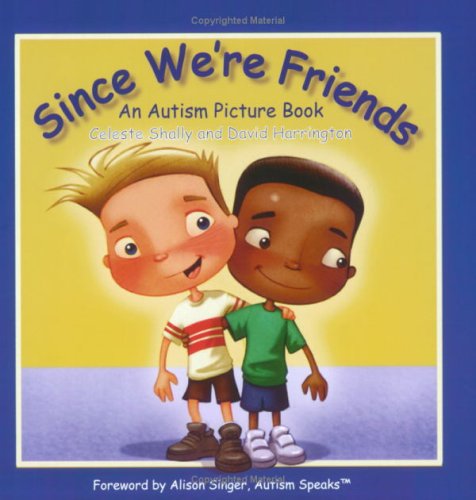
Autism Spears

My parenting route was not as I had predicted. I would like to share my experience in the hope that another parent may read this and feel not so alone and scared. To me, Autism is not a disorder, but a unique way of life. I did not always feel this way, nor did I foresee that Autism would be a blessing, not a hindrance, for me.

"Your son has Autism." These four words change your life and your whole perception of the world around you. If you are like me, I had no idea what those four words meant when I first heard them. Part of me wanted to disbelieve. Part of me wanted to cry. Part of me was angry. I was incredibly confused. However, I was quickly grounded when my dear friend, Linda, looked at me and questioned why I was crying. "This doesn't change how you feel about Alex*. And it certainly doesn't change how he feels about you. It only means that you now know what it is, and doors will open for services needed to help him." I was truly blessed to have someone say this to me. It brought me back from the "Flight" mode and into the "fight" mode. A fight to help my son.

The first thing was to learn as much about Autism as I possibly could. I attended all workshops regarding not only Autism, but behaviour management, anxiety, sensory sensitivities, toilet training, promoting language, and skill building. There were several workshops offered by our Region Support Services at various times throughout the year. As well, there are always speakers visiting the community, offering evening workshops and short conferences to those interested. In the meantime, my husband and I needed to develop a profile of the areas of strength, and areas of need in our son. It was so easy to point out his needs, while we struggled to find some strengths. Everything was so hidden beneath his solitude surface. However, with keen observation skills, we could detect the many marvels that existed within our beautiful boy. He worked so hard at everything he did. He always wanted to please us, or the gentle dedicated people who provided therapy to him. We worked together to complete reasonable goals and objectives for Alex. We needed to determine the areas that we needed to be educated in, as well as the areas that we needed to focus on.

Needless to say, we also needed to stay in sync with each other. We needed breaks now and then. Without family around, we were fortunate to hire a day care teacher to babysit on a consistent basis. Every second Thursday, we had date night. We would go out to dinner and feel comfortable knowing that the day care teacher was fully capable to deal with matters at home. Actually, it was harder for me than it was for Alex to adjust to this. I needed the push to get out the door.

However, I was in a learning curve and discovering knowledge as I continued. I learned to set clear ground rules and be consistent. I learned to avoid all power struggles, and to give choices. Overall, I learned that if I remained calm, then this would reflect on Alex, and he would be much calmer. It is always important to remember that our emotion will mirror theirs. I found that lowering my voice to just above a whisper when Alex was upset seemed to bring him back down. He needed to stop screaming to try to hear me.

As well, transition times are always unsettling. I learned to give warnings about what was going to happen, or where we would be going and when. I also built in scenarios to let Alex know that sometimes, things change and we would still be fine. Although I was trying to keep things predictable for him during the early years, I knew that I needed to build in flexibility. The world is not a predictable place, and Alex needed to learn to be adaptable. He still needed to learn how to cope with those random changes which keep life so interesting. We broke things into "big deals" and "little deals". We both learned that there aren't too many life experiences that are really "big deals". Therefore, Alex learned to shrug off those previous anxiety provoking thoughts.

However, Alex had some other challenges that I always had to take into consideration. He was auditory sensitive. Alex could hear the planes, trains, ambulances and fire trucks well before anyone else even noticed. Some loud noises not only seemed to scare him, but they also seemed to hurt him. I tried to train Alex to put ear plugs in when things bothered him, but this proved very trying and non-successful. Alex could more easily put his hands over his ears than put ear plugs in. Nevertheless, trial and error was necessary to find what would work for him. During the ear plug training, Alex put his hands to his ears and I did the same. I quickly removed my hands and smiled. Alex did the same. For the next few months, I put my hands on my ears whenever I saw Alex do it. I would quickly remove my hands and Alex would do the same. My son's imitation skills were excellent. I knew that this was the best he could manage at that time. I figured that this was a success when trying to deal with a sensitivity that I could only imagine what it was like. Sensory sensitivities are very complex, and should not be treated lightly. I once worked with a girl who was very light sensitive. She would come into the classroom, sit at her desk and close her eyes. Of course, everyone tried to make her open her eyes and keep them open. With this, the girl would squint and at times, throw items at people. She was clearly not enjoying the classroom experience. Her teacher could see her discomfort, and allowed her to wear a baseball hat in class. The girl kept her eyes open and was much happier. It was important to remember that often the behaviours that are demonstrated are not done out of malice, but out of discomfort. It is also important to keep developing new goals, new strategies and new intervention plans. When Alex was younger, we focused on speech therapy - expressing his wants, desires and making simple requests. As he mastered this, we moved on to social communication goals - greetings and conversation skills. This is a never ending cycle. There are so many hidden skills/talents that come naturally to mainstream children, while they all needed to be taught to Alex. Simple body language cues were foreign to him. There were times when his younger brother became angry and put his hands on his hips and turned his head from Alex. Alex did not seem to notice or care. He just carried on with what he was doing. This is where I needed to start training family members on what to do with Alex. He needed to learn that certain body language expressed emotion. And, it is truly amazing to watch the eager, patient teaching of one child to another. It really is an invaluable method. A peer teaching another peer is so very effective, and should be tried whenever possible.

Alex is now a teenager and taking College level courses at high school. He still struggles with social communication but is constantly learning. He questions what he doesn't understand. Alex asks if we are joking when he is confused by sarcasm, teasing or unapparent humour. Questioning has been essential for Alex, as he now understands that it is okay to ask for clarification. He has transferred this skill into the classroom and now raises his hand to let the teacher know that he needs to have the lesson explained differently because he doesn't understand. We have continuous discussions and modelling to help with his processing skills.

To conclude, I don't know where Alex will be ten years from now, but I do know that he and I will be happy where we are. I look at Alex as the most pure individual that I know. He has no inhibitions. He is honest. He is kind. He would never intentionally hurt someone. When Alex is happy, he actually jumps up and down and shouts out in glee. When he is sad, he cries with the deepest heartfelt grief that I have ever heard. He is pure. I know Alex is wonderful, and people who take the time to get to know him, also see what a remarkable teenager he is. I try to never look back, and not to hold grudges against people who have said things that no mother should ever hear about a son. Ignorance is not an excuse, but it is out there and has to be dealt with. My most trusted advice is, and always will, be that a mother knows her child, and needs to follow her gut instincts. If something is problematic for your child, then you set your goal(s), and follow a consistent plan. Every child is unique and needs to be nurtured in different ways at different times. Don't give up. Keep smiling and enjoy the possibilities. The possibilities are endless. You just need to discover them.

Sunday, September 27, 2009

Autism and Social Education

Social Education

Autism

Scientist are finding more and more support for taking an relationship-based approach to autism treatment. The following section explains why. Included are easy techniques you can begin immediately to encourage the social development of your child with autism.

The Science

Earlier theories saw autism as a behavior disorder and so attempted to treat it through behavior modification, i.e. attempting to reinforce non-autistic behaviors and punish autistic behaviors to stamp-out the symptoms of autism. This view grew in the 1950s (soon after autism and Asperger’s syndrome were first outlined) when the trend in psychology was for behaviorism; a philosophy stating that only any organisms behavior was worth studying and science should spend no time investigating thoughts, feeling or conscious experience to understand human beings. Much work in the behaviorist camp was done with animal training. It is from this scientific backdrop that behaviorist treatments for autism arouse (e.g. ABA and various forms of the original therapy proposed by Ivan Lovaas).

Fortunately psychology has moved on and realized the crucial importance of studying thoughts, feeling and the conscious experience in understanding human beings. From this more modern and holistic approach to psychology has emerged a new understanding of autism. One of autism as a challenge in creating basic relationships. There is now much research showing that children with autism can be seen to be different to their typically developing peers as early as 6 months of age (often only in retrospect at this stage but researchers are working on ways to identify autism earlier than the usual 2.5-3 years).

Children with autism (or those who will be later diagnosed with autism) do not socially orient in the usual way. This means they do not pay as much attention as other children do to social stimuli, such as an adult calling their name or making eye contact with them. This is a very basic social function that typically developing children master in their first few months. Children who are delayed in developing the skill of social orienting are not learning to process social stimuli normally and are then delayed in developing the skills of joint attention (paying attention to the same activity or topic as another person) and shared affect (sharing emotional experiences with others). Over the first years of a child’s development these are crucial steps and lay the foundation for all future social and language learning. Without the ability of joint attention one can not have a conversation or even play a simple tickle game for very long.

Similarly this child can not begin to take another person’s perspective and imagine what another person might be thinking or feeling (developing a Theory of Mind) which is vital for participating in fluid social exchanges. Without these skills the child with autism is floundering in the ever-changing social arena and instead focuses on things his brain is wired to grasp more easily - objects and mechanical (non-dynamic) systems.

It is not yet clear why children who develop autism respond to social stimuli in this way. Some psychologists have suggested that it may be because social stimuli are inherently complex, varied and dynamic or that the brain is wired in a way that is less able to process (or filter) social stimuli as opposed to more fixed, non-dynamic non-social stimuli.

It is well accepted among psychologists and child development experts that typically developing children learn through reciprocal, social interactions and that early relationships form the foundation from which children feel secure to explore the world at large. Children who are growing up with an autistic brain miss out on this fundamental social education. It is upon this understanding that relationship-based approaches to autism, such as The Son-Rise Program, draw and offer parents a way to provide children with the social education on which they have missed out.

The Easy Part

Here are some very simple, yet powerful, first steps that you can take to start redirecting your child’s social education.

1. Spend at least 30 minutes each day in a non-distracting room you have prepared for your child or at this point any quiet room where you can be one-on-one with your child (without the stimulation of electronic toys or other people).

2. Follow your child. Do whatever he or she wants to do. There is no particular activity that you should be doing, just do whatever your child wants to do. What is your child’s favorite thing to do? Does he or she like to line up objects, jump on the bed, run around in circles, make noises, talk about dinosaurs? Pick one of your child’s activities and go do it with him or her. We’re not talking about going and hanging out in the same room as your child runs around, we’re talking about running with him or getting down on the floor and lining up cars. Just do whatever he or she is doing no matter how silly it seems. Follow your child. Don’t try to lead or direct, just follow.

As you join your child in his or her activity focus on firstly getting absorbed in the activity. In The Son-Rise Program this is described as “being present”. Let go of all other thoughts. Stop wondering what people would think if they saw you running around flapping your hands. Don’t pay any attention to thoughts that tell you “this is silly”, “I’m too old for this”, “my child will think I’ve gone nuts!” Just get into the activity, whatever it is.

Once you are present with the activity start to find a way to appreciate this experience and the child whom you are following. You could look at your child and be grateful that s/he has found an activity s/he so clearly enjoys. You could find something to appreciate about the activity–the way your body feels as you do it, the way things look as you do it, or something about the sound of it. Find something about this experience that you can genuinely appreciate. Then focus on that feeling of appreciation as you continue to follow your child. Be aware of how it feels to be appreciative and grateful as you join your child in his or her own activity. Try to make your appreciation bigger and bigger as you continue.

Focus on having fun rather than on teaching your child anything. Remember that the simple act of playing with another person is the goal here and is much more important for a child with autism that any information you might be able to teach at this point. Just have fun!

3. Focus on eye contact. Position yourself in front of your child and as much as possible below his or her eye level while you play together. You could try holding any toys in which your child is interested up to your eye level as you hand them over. Finally, CELEBRATE whenever your child makes eye contact with you - cheer, clap, sing - do whatever feels good. You goal is to make eye contact an enjoyable experience for your child. Play! Be goofy, nobody is watching you! Enjoy yourself your child and the simple act of making eye contact with this precious little person.

Kat Houghton is an autism treatment consultant specializing in The Son-Rise Program, a relationship-enhancement method of approaching autism. She is the founder and director of Inspired by Autism Consulting (http://www.inspiredbyautism.com), director of research at The Autism Treatment Center of America and completing a PhD in Psychology at Lancaster University in the UK.

Article Source: http://EzineArticles.com/?expert=Kat_Houghton


Wednesday, July 22, 2009

Knowing More About Autism

Knowing More About Autism

Autism is the term given to the collection of behaviors arising from unusual neurological (brain) development. There is evidence that in some cases this neurological difference is present from birth. However the observed behaviors, from which autism is diagnosed, tend not to be detectable until around the age of 18 months.

Autism is usually thought of as a behavioral disorder, some early theorists have gone so far as to suppose it to be caused by “refrigerator mothers”. Research has since thoroughly discredited this notion. For the majority of the last sixty years (since autism was first described scientifically by Kanner in 1943) the syndrome has still been thought of in terms of behavior rather than underlying brain development. As such all current diagnoses are made on the basis of observable behavior which significantly delays diagnosis in most cases. Currently steps are being made towards identifying neurological markers of autism to aid in earlier diagnosis and thus earlier intervention.

What about genetics? There is much evidence showing a strong genetic component in autism (Rutter, 2005). There are also suggestions that autism is caused by poor sensory integration (Smith-Myles & Simpson, 1998), maturational delays in primary reflexes (Teitelbaum, Benton & Shah, 2004), immune system dysfunction (Pardo, Vargas & Zimmerman, 2006), or gastro-intestinal issues (Gurney, McPheeters & Davis, 2006). At this point there is no clear consensus.

Autism is now more frequently referred to as Autism Spectrum Disorder (ASD) indicating the wide variation in symptomology. Children diagnosed with PDD or PDD-NOS or Asperger’s Syndrome tend to exhibit similar behaviors to a milder degree.

The behaviors that tend to lead to a diagnoses of Autism or ASD are usually classified into three clusters – known as the “triad of impairments”. These describe challenges in:

1. Social Interaction
2. Communication and Language and
3. Imagination (including use of repetitive, self-stimulatory behaviors)

What the diagnostic criteria fail to acknowledge is the strengths exhibited by people diagnosed with autism. There are many, many reports – scientific and otherwise – about the incredible abilities many people with autism posses. At the extreme end of this spectrum are people referred to as savants who display mind-boggling abilities often in mathematics, music or art (Happe, 1999). The thousands of people with autism who don’t gain fame for their savant abilities also posses many amazing skills. People with autism have been shown to often posses greatly enhanced visuo-spatial skills (Happe, 1999). We have worked with five year old children who can put together a 500 piece jigsaw puzzle in a matter of minutes with the picture side facing down. Other people with autism are able to memorize a scene they see once and go home and draw the scene down to the tiniest detail (e.g. Steven Wiltshire).

Many people with autism, actually a higher proportion than in the non-autistic population have perfect pitch–the ability to produce a note heard (Happe, 1999). Still others, as popularized by the movie “Rainman”, are able to do incredible mathematical calculations. We have worked with children as young as four capable of performing multiplication of two three-digit numbers in their head. These children have had no training in mathematics but showed this ability from an early age. The mother of one child we worked with as a teenager told us her son began teaching himself math from age two and by five was performing calculus problems for fun.

It is important to look at any child as a whole rather than focusing only on what is challenging for that child. By embracing a child’s strengths and motivations you can help that child to grow in his or her areas of challenge. This is widely accepted wisdom in the education of typically developing children. However in approaches to autism this wisdom has been regrettably ignored. The trend has been to try and steer children with autism away from their interests and practiced skills as these are seen as “obsessions”. These skills have been believed to be harmful to the child in some way to the extend that extreme measures have been taken (and still are in some therapies) to keep children away from their interests including electric shock and being sprayed with water. This approach has come from a core belief about autism that thankfully is beginning to change.

The old belief is that autism is a behavioral disorder. The consequence of this belief has been to focus on changing the behavior and trying to stamp out those deemed “atypical”. The new belief is that autism is the developmental consequence of a brain programmed to operate differently. The consequence of this belief is that therapy focuses on providing a physical and social environment that accounts for this difference and facilitates the optimal enjoyment and learning of the individual child.

Practitioners of The Son-Rise Program have seen for the last three decades that acceptance and appreciation of these interests and activities can build a bridge to social interaction with a child with autism. Through social interaction many other skills can be learned by the child. There is now scientific research showing the value of this approach (e.g. Dawson & Galpert, 1990; Kim & Mahoney, 2004; Mahoney & Perales, 2005 and Trivette, 2003).


Kat Houghton is an autism treatment consultant specializing in The Son-Rise Program, a relationship-enhancement method of approaching autism. She is the founder and director of Inspired by Autism Consulting (http://www.inspiredbyautism.com), director of research at The Autism Treatment Center of America and completing a PhD in Psychology at Lancaster University in the UK.

Article Source: http://EzineArticles.com/?expert=Kat_Houghton

To be a Good Special Education Teachers

To be a Good Special Education Teachers

Special education can be defined as specially configured instructions and other education-related services to meet the educational, social, emotional, and vocational needs of students with disabilities. Special education teachers educate students who have various types of disabilities, including speech or language impairments, mental retardation, emotional distress, hearing impairments, orthopedic impairments, multiple disabilities, specific learning disabilities, visual impairments, autism, combined blindness and deafness, traumatic brain injury, and other health impairments. A special educator has to work with students of all ages from infants and toddlers, students in elementary, middle, and high schools, as well as youths. The special educator's job also involves working with a team of professionals, i.e., doctors, speech pathologists, social workers, orthopedists, psychiatrists, counselors, etc. The teaching methods and techniques in special education would vary based on the disability and it would also vary from individual to individual.

The teaching methods include individual instructions, problem-solving techniques, group work, and special assignments depending upon the needs of the individual. They can also develop individual educational programs for each student to help with the child's activities of daily living. As technology plays an important role in special education, a teacher is expected to instruct the students and their parents on the latest instrumentations and its usage in disability, as the case maybe. For instance, interactive software and computers that talk are now available in the market, which would be of great help for students with speech impairments. It requires a lot of enthusiasm, optimism, patience, tolerance, and perseverance for one to be a special education teacher as the job involves a lot of interaction with students of all age groups and with other people.

In the United States, all states demand special education teachers to be licensed. The special education teacher has to complete of a teacher's training program and must have a Bachelor's degree or a Master's degree. As they deal with students with mild to profound disabilities, their job demands specialization in either one or other areas of disability, which would enable the teachers to develop their own curriculum materials and teaching techniques to meet the needs of the students.

Special Education provides detailed information on Special Education, Special Education Degrees, Online Special Education Courses, Journal Of Special Education and more. Special Education is affiliated with Teacher Education Philosophies.

Article Source: http://EzineArticles.com/?expert=Ken_Marlborough

Monday, June 15, 2009

Home Schooling for Autistic Child, Why Not?


Home Schooling for Autistic Child, Why Not?

By: Rachle Evans

If you have an autistic child, then you are aware of the many challenges you face raising your child. With the behavioral problems that many autistic children suffer from, raising an autistic child may feel like two full-time jobs at times. Educating an autistic child is also a difficult task that must be fully thought out.

While public schools are funded to handle children with special needs, these locations are not always the best arenas for autistic children. One of the reasons that home-schooling your autistic child is a good idea is because special education programs may lump autistic children in with others who have maladaptive behavioral problems.

Remember, autistic children have behavioral problems due to their developmental inability to properly function normally in social situations. If they are placed in with others who have emotional problems they may regress instead of progress. However, if home-schooled, parents can control the social influences that are likely to either help or hinder the progress of their child. They can keep them away from insensitive teachers, bullies, and have greater control of their education.

Due to their obvious differences, many autistic children are treated with cruelty. This horrible fact of life can undo much of the progress that your child may have already made. Most autistic children function best when routines are set. Home-schooling is the best way to ensure these routines are established and followed.

In addition, home-schooling is a good choice because many autistic children are sensitive to sound. If they are in a classroom with a bunch of other children making noise, it can be difficult for them to focus.

The home-schooling setting is normally more quiet and conducive to learning, besides, it offers autistic children a typically 1:1 teacher to student ratio. Plus, if you’re following a GFCF diet it’s much easier to implement this at home and you can be sure that your child is only eating what you’re giving them.

Furthermore, research has demonstrated that autistic children who are home-schooled score better on problem behavior assessments.

In order to make the most out of your child’s home-school experience, it may be a good idea to keep a journal. Write down anything about your child’s behavior and performance that is important. For instance, you can keep track of when your child is most productive, when he or she learns best, and what are the potential distractions. Remember you’ll need to adapt your teaching style to suit their learning ability. Trying to make them learn ‘your way’ will just lead to a lack of progress and frustration all round.

As a parent and a teacher it is important for you to read up on recent literature involving the education of autistic children. There are many resources that provide information on teaching strategies, learning methods, and the different types of intelligence. Knowing this information will enable you to tailor a home-school program that will meet your child’s needs.

The beauty about home-schooling is that if one approach doesn’t work you can adapt your style until you find an approach that does work.

Home-schooling is fast becoming a common educational choice for parents of autistic children. The research involved clearly outlines the benefits of home-schooling. However, you must ensure that you will have the time and the dedication to follow through with home-schooling. Simply keeping your child at home is not going to do any good if learning is not occurring. It is important that you address academic, behavioral, and social needs.

Grab your free copy of Rachel Evans's free Autism Newsletter - Overflowing with easy to implement methods to help you discover more on how to go about teaching a child with autism at home and also more information on autism schools. You can also visit Rachel's blog at http://www.the-essential-guide-to-autism.com/blog

Article Source: http://EzineArticles.com/?expert=Rachel_Evans

Wednesday, June 10, 2009

Tips to Have Nice Travelling with Autistic Child


Tips to Have Nice Travelling with Autistic Child

By: Abhisek Agarwal

Everyday is a challenge when it comes to living with autistic children. What are thing things you should do when going for a vacation or someplace else? Here is a list of things that the parents of an autistic child can do while traveling with him or her.

1. Plan ahead. Plan all your trips well in advance. This will give the child enough time to get accustomed to the idea of traveling and the child will be familiar with the process. Explain to them the places you will visit and things you will all do.

2. Take along with you some of the objects that the child likes, for instance, his or her favorite toy. Take the blanket and pillow they use daily. Try to take as many familiar items as possible so that the child will not feel lost. This will also allow him or her to get used to a new environment.

3. Take all necessary medications and medicines. The last thing you will need will be to want a medicine that you do not have. Refill the prescriptions before your trip to ensure you do not fall short.

4. Always keep a schedule with you while you travel. As far as possible try keeping the schedule that you use at home. Keep the same bed time everyday. Autistic children feel secure when they stick to a schedule.

5. Ensure your child is not overloaded. If the child suffers from many sensory issues, ensure he or she is not overloaded. If your child is getting overwhelmed, take him or her back to the hotel for some rest. If your child has issues concerning bright lights or loud noises, warn your child well in advance before taking him or her to any such place.

6. Never force the child to do a thing he or she is uncomfortable doing. For instance, if the child does not like loud noises or crowds, do not take him or her to an amusement park. Hire a qualified person to look after your child while you are visiting the park. This way the child could be kept occupied in something he or she finds interesting.

7. Ensure your child is carrying some sort of ID which contains your name and telephone number in case of emergency or in case the child gets lost. If the child can communicate, teach him or her what to say in case he or she gets lost. This will be hard for them, as they do not like dealing with people.

8. Stay calm in case there is some emergency. Your child can pick up your stress if it observes that you are stressed.

9. While traveling, try to keep the child occupied in activities that he or she enjoys. This could include a DVD player or a hand held game etc. This will ensure your child does not get too bored. This also helps distract them incase they start to feel uneasy.

10. Make sure that the place you are staying at is aware that your child is Autistic. This is important so that the staff knows what to do in case your child wanders off. If they see the child alone, they will contact you immediately.

While traveling with a child who is Autistic, extra planning is required. But it is not as difficult as it seems. Just ensure that your trip maintains a certain amount of structure. You and your child will not fail to have a good trip.

Abhishek has got some great Autism Treatment Secrets up his sleeves! Download his FREE 41 Pages Ebook, "Understanding And Treating Autism" from his website http://www.Health-Whiz.com/555/index.htm. Only limited Free Copies available.

Article Source: http://EzineArticles.com/?expert=Abhishek_Agarwal

Understanding Basic Needs of Autistic Childs

By: Jon Arnold

Although most children are naturally social and require contact with others to grow and develop, occasionally a child may not behave this way and can seem withdrawn, display peculiar behavior, face problems communicating and show a total lack of social awareness and interest in others. Such abnormal behavioral patterns are characteristic of a developmental disorder known as autism.

The autistic child generally stays aloof and is unable to respond to others. Autistic children may not even make eye contact and may also engage in odd behaviors like flapping their hands, rocking their heads or show an obsessive need to maintain order. It isn’t uncommon for children affected by autism to not speak at all. Those who do speak may do so in rhyme or repeat what they hear (echolalia) or may use a strange language of their own.

The exact cause of autism is still unknown although research suggests a problem with the structure or functioning of the central nervous system.

Some autistic children are exceptionally bright and do quite well in school although they may have problems adjusting to the school environment. Other children suffering from autism may not do as well and autism is often associated with mental retardation as well. But it needs to be noted that autism and retardation are very distinct, since it is not uncommon to have an autistic child who is exceptionally bright.

Teaching an autistic child to function in normal society can be frustrating at times since the child needs your constant attention and the whole process can be quite intensive. Here are a few ways you can help your autistic child overcome this problem and develop into a well rounded individual:

* It’s important to ensure your autistic child doesn’t feel left out and is a part of the family. At the same time it’s important to take care to not make your child the center of all attention since this will do more harm than good, because outside of the home, like at school, they will not be able to be the center of attention.

* The autistic child needs to live in and see a set routine that he/she can count on everyday. In the absence of a set routine, an autistic child may respond with a bizarre behavior.

* It has been observed that the autistic child doesn’t learn well from experience. In fact, every event that that transpires may seem completely new to the autistic child, even if the same event took place yesterday. This is why it’s important to use the same group of words each time you reward or reprimand the child since this helps them remember events better.

* If you are going to make any changes around the house or around the autistic child’s surroundings, describe what you are going to do to them before you act. This is because autistic children usually take much longer to adjust and sudden changes can confuse them.

* Look for the best educational program to suit your child’s needs. Preschool intervention programs offer special courses for the autistic child who is not old enough to go to school yet.

Apart from the above mentioned ways, remember that consistency in everything you say or do is crucial to unlock the potential within your autistic child. At the same time, it’s equally important to take time out for yourself so that you don’t feel overwhelmed by the task at hand. So as long as you are peaceful with yourself, a little love, some patience and your wholehearted devotion is all that you need to see your little one through all of their troubles.

To get more insights and more information about the Autistic Child please visit our web site at http://www.autism-explained.com

Article Source: http://EzineArticles.com/?expert=Jon_Arnold

Knowing Basic Signs of Autism

By: Richard GM Taylor

Children develop very quickly at an early age. All parents prey that their children will develop normally and grow up in good health with a bright future ahead of them. Autism is a concern of many parents so what is the sign of autism in your child?

As parents we are on constant lookout for any sign of abnormal development such as autism in our children and of course it is so easy to jump to the wrong conclusions. A child will go through many phases and being able to spot anything abnormal is very difficult. However, we should look out for any abnormal behavior which could indicate autism.

Autism occurs in around 1 in every 700 children and statistically more likely to occur in boys. It is not an illness brought by an infection or some contagious disease. Autism is something the child is born with and results from an abnormal development of the brain. Autism results in a level of introvertive behavior with the child not willing to interact with other children and perhaps the most disturbing symptom is their lack of response to their parents. A child with autism lacks the interpersonal skills of a normal child.

Autism usually manifests itself between the ages of 18 months to 3 years although some signs can be detected in babies with autism. The main symptoms to look out for are as follows:

Babies

* An autistic baby does not respond to your presence - will not make eye contact with you and appears to be more interested in staring at some other moving inanimate object.
* An autistic baby will often appear too calm and may lie still for hours without crying.
* An autistic baby may not interact with other babies.

18 month - 3 Years old

* An autistic child may appear distracted and not look you in the eye when trying to communicate with them.
* An autistic child may have difficulty picking up the sounds of words and will need repeating many times.
* An autistic child may have unusual mannerisms which they like to repeat many times.
* An autistic child may lack imagination and not like role play or 'pretend' games.
* An autistic child may be disturbed by a change in routine.
* An autistic child may show a lack of interest in other children and not want to play with them.

This is not an exhaustive list by any means and we should be aware that some of these symptoms can be detected in 'normal' children. However, if your baby or child exhibits some or all of these symptoms then you are advised to seek advice from a doctor or child specialist. They will carry out some simple tests to either confirm your fears or hopefully in most cases ease your concerns and allow you to enjoy the ongoing 'normal' development of your child.

However, if your child is confirmed as autistic then you should not despair. It is not your fault and like any other child they will need your love and support. Just as the cause of Autism is unknown, there is currently no known cure either. Depending on the severity of the condition with your particular child it may be necessary for you to make certain allowances in your behavior towards them and in your daily routine.

Seek the advice of experts in this field - in more severe cases it may be necessary for you to arrange for your child to attend a special school. Often an autistic child will exhibit very special abilities and talents which need to be nurtured and controlled while helping them to develop the social skills which come more naturally to other children.

The condition of autism in children is well known and you should be able to receive plenty of help and support.

For more information on Autism visit http://www.aboutautismhealthsite.info and for more health topics visit http://www.the-health-issues-directory.com

Article Source: http://EzineArticles.com/?expert=Richard_G_M_Taylor

Monday, June 1, 2009

Autism is Wonderful


Autism is Wonderful


Go to Autism Awareness


Go to Autism Awareness


an Anagram of Autism Education Degree


an Anagram of Autism Education Degree


Privacy Policy

Privacy Policy for http://kurdi-caklukhin.blogspot.com/

If you require any more information or have any questions about our privacy policy, please feel free to contact us by email at cak.lukhin@gmail.com.

At http://kurdi-caklukhin.blogspot.com/, the privacy of our visitors is of extreme importance to us. This privacy policy document outlines the types of personal information is received and collected by http://kurdi-caklukhin.blogspot.com/ and how it is used.

Log Files
Like many other Web sites, http://kurdi-caklukhin.blogspot.com/ makes use of log files. The information inside the log files includes internet protocol ( IP ) addresses, type of browser, Internet Service Provider ( ISP ), date/time stamp, referring/exit pages, and number of clicks to analyze trends, administer the site, track user’s movement around the site, and gather demographic information. IP addresses, and other such information are not linked to any information that is personally identifiable.

Cookies and Web Beacons
http://kurdi-caklukhin.blogspot.com/ does use cookies to store information about visitors preferences, record user-specific information on which pages the user access or visit, customize Web page content based on visitors browser type or other information that the visitor sends via their browser.

DoubleClick DART Cookie
.:: Google, as a third party vendor, uses cookies to serve ads on http://kurdi-caklukhin.blogspot.com/.
.:: Google's use of the DART cookie enables it to serve ads to users based on their visit to http://kurdi-caklukhin.blogspot.com/ and other sites on the Internet.
.:: Users may opt out of the use of the DART cookie by visiting the Google ad and content network privacy policy at the following URL - http://www.google.com/privacy_ads.html

Some of our advertising partners may use cookies and web beacons on our site. Our advertising partners include ....
Google Adsense


These third-party ad servers or ad networks use technology to the advertisements and links that appear on http://kurdi-caklukhin.blogspot.com/ send directly to your browsers. They automatically receive your IP address when this occurs. Other technologies ( such as cookies, JavaScript, or Web Beacons ) may also be used by the third-party ad networks to measure the effectiveness of their advertisements and / or to personalize the advertising content that you see.

http://kurdi-caklukhin.blogspot.com/ has no access to or control over these cookies that are used by third-party advertisers.

You should consult the respective privacy policies of these third-party ad servers for more detailed information on their practices as well as for instructions about how to opt-out of certain practices. http://kurdi-caklukhin.blogspot.com/'s privacy policy does not apply to, and we cannot control the activities of, such other advertisers or web sites.

If you wish to disable cookies, you may do so through your individual browser options. More detailed information about cookie management with specific web browsers can be found at the browsers' respective websites.

Autism Education in Pictures


Autism Education in Pictures