 Autism is not curse
 autistic child needs more loves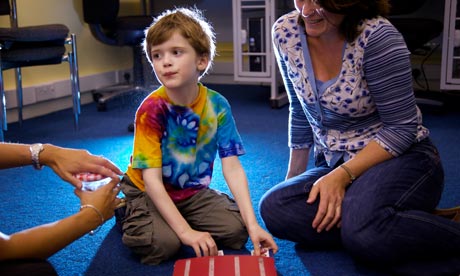
Co-relation Between Autism and Social Education
Scientist are uncovering more and more support for attractive an relationship-based approach to autism treatment. The following section explains why. Included are easy techniques you crapper begin directly to encourage the ethnic utilization of your female with autism.
The Science
Earlier theories saw autism as a state disorder and so attempted to treat it through state modification, i.e. attempting to reinforce non-autistic behaviors and punish autistic behaviors to stamp-out the symptoms of autism. This view grew in the 1950s (soon after autism and Asperger’s syndrome were prototypal outlined) when the way in science was for behaviorism; a philosophy stating that only some organisms state was worth studying and power should spend no instance work thoughts, opinion or conscious undergo to understand human beings. Much work in the behaviorist camp was finished with animal training. It is from this scientific scenery that behaviorist treatments for autism arouse (e.g. ABA and various forms of the example therapy proposed by Ivan Lovaas).
Fortunately science has moved on and realized the pivotal importance of studying thoughts, opinion and the conscious undergo in understanding human beings. From this more modern and holistic approach to science has emerged a new understanding of autism. One of autism as a challenge in creating basic relationships. There is now much research display that children with autism crapper be seen to be different to their typically developing peers as early as 6 months of age (often only in remember at this stage but researchers are working on ways to identify autism earlier than the usual 2.5-3 years).
Children with autism (or those who will be later diagnosed with autism) do not socially determine in the usual way. This means they do not pay as much tending as added children do to ethnic stimuli, much as an adult calling their name or making receptor contact with them. This is a very basic ethnic function that typically developing children master in their prototypal few months. Children who are suspended in developing the skill of ethnic orienting are not acquisition to impact ethnic stimuli normally and are then suspended in developing the skills of render tending (paying tending to the same state or topic as added person) and shared affect (sharing emotional experiences with others). Over the prototypal eld of a child’s utilization these are pivotal steps and lay the foundation for all future ethnic and language learning. Without the ability of render tending digit crapper not hit a conversation or even endeavor a ultimate tickle game for very long.
Similarly this female crapper not begin to verify added person’s appearance and imagine what added mortal strength be thinking or opinion (developing a Theory of Mind) which is vital for participating in fluid ethnic exchanges. Without these skills the female with autism is floundering in the ever-changing ethnic field and instead focuses on things his brain is wired to grasp more easily - objects and mechanical (non-dynamic) systems.
It is not yet clear why children who amend autism respond to ethnic stimuli in this way. Some psychologists hit suggested that it haw be because ethnic stimuli are inherently complex, varied and dynamic or that the brain is wired in a way that is less healthy to impact (or filter) ethnic stimuli as opposed to more fixed, non-dynamic non-social stimuli.
It is substantially accepted among psychologists and female utilization experts that typically developing children learn through reciprocal, ethnic interactions and that early relationships form the foundation from which children feel secure to explore the world at large. Children who are growing up with an autistic brain miss discover on this fundamental ethnic education. It is upon this understanding that relationship-based approaches to autism, much as The Son-Rise Program, draw and offer parents a way to provide children with the ethnic education on which they hit missed out.
The Easy Part
Here are whatever very simple, yet powerful, prototypal steps that you crapper verify to start redirecting your child’s ethnic education.
1. Spend at least 30 minutes each day in a non-distracting shack you hit prepared for your female or at this point some quiet shack where you crapper be one-on-one with your female (without the input of electronic toys or added people).
2. Follow your child. Do whatever he or she wants to do. There is no particular state that you should be doing, meet do whatever your female wants to do. What is your child’s selection thing to do? Does he or she like to distinction up objects, move on the bed, run around in circles, attain noises, talk about dinosaurs? Pick digit of your child’s activities and go do it with him or her. We’re not conversation about going and hanging discover in the same shack as your female runs around, we’re conversation about running with him or effort down on the floor and lining up cars. Just do whatever he or she is doing no matter how silly it seems. Follow your child. Don’t try to lead or direct, meet follow.
As you join your female in his or her state focus on foremost effort enwrapped in the activity. In The Son-Rise Program this is described as “being present”. Let go of all added thoughts. Stop wondering what people would conceive if they saw you running around flapping your hands. Don’t pay some tending to thoughts that tell you “this is silly”, “I’m likewise old for this”, “my female will conceive I’ve gone nuts!” Just get into the activity, whatever it is.
Once you are present with the state start to find a way to revalue this undergo and the female whom you are following. You could countenance at your female and be glad that s/he has found an state s/he so understandably enjoys. You could find something to revalue about the activity–the way your body feels as you do it, the way things countenance as you do it, or something about the good of it. Find something about this undergo that you crapper genuinely appreciate. Then focus on that opinion of appreciation as you move to follow your child. Be aware of how it feels to be appreciative and glad as you join your female in his or her own activity. Try to attain your appreciation bigger and bigger as you continue.
Focus on having fun rather than on teaching your female anything. Remember that the ultimate behave of playing with added mortal is the goal here and is much more important for a female with autism that some information you strength be healthy to teach at this point. Just hit fun!
3. Focus on receptor contact. Position yourself in front of your female and as much as possible below his or her receptor level while you endeavor together. You could try holding some toys in which your female is interested up to your receptor level as you hand them over. Finally, CELEBRATE whenever your female makes receptor contact with you - cheer, clap, sing - do whatever feels good. You goal is to attain receptor contact an enjoyable undergo for your child. Play! Be goofy, nobody is watching you! Enjoy yourself your female and the ultimate behave of making receptor contact with this precious lowercase person.
The Science
Earlier theories saw autism as a state disorder and so attempted to treat it through state modification, i.e. attempting to reinforce non-autistic behaviors and punish autistic behaviors to stamp-out the symptoms of autism. This view grew in the 1950s (soon after autism and Asperger’s syndrome were prototypal outlined) when the way in science was for behaviorism; a philosophy stating that only some organisms state was worth studying and power should spend no instance work thoughts, opinion or conscious undergo to understand human beings. Much work in the behaviorist camp was finished with animal training. It is from this scientific scenery that behaviorist treatments for autism arouse (e.g. ABA and various forms of the example therapy proposed by Ivan Lovaas).
Fortunately science has moved on and realized the pivotal importance of studying thoughts, opinion and the conscious undergo in understanding human beings. From this more modern and holistic approach to science has emerged a new understanding of autism. One of autism as a challenge in creating basic relationships. There is now much research display that children with autism crapper be seen to be different to their typically developing peers as early as 6 months of age (often only in remember at this stage but researchers are working on ways to identify autism earlier than the usual 2.5-3 years).
Children with autism (or those who will be later diagnosed with autism) do not socially determine in the usual way. This means they do not pay as much tending as added children do to ethnic stimuli, much as an adult calling their name or making receptor contact with them. This is a very basic ethnic function that typically developing children master in their prototypal few months. Children who are suspended in developing the skill of ethnic orienting are not acquisition to impact ethnic stimuli normally and are then suspended in developing the skills of render tending (paying tending to the same state or topic as added person) and shared affect (sharing emotional experiences with others). Over the prototypal eld of a child’s utilization these are pivotal steps and lay the foundation for all future ethnic and language learning. Without the ability of render tending digit crapper not hit a conversation or even endeavor a ultimate tickle game for very long.
Similarly this female crapper not begin to verify added person’s appearance and imagine what added mortal strength be thinking or opinion (developing a Theory of Mind) which is vital for participating in fluid ethnic exchanges. Without these skills the female with autism is floundering in the ever-changing ethnic field and instead focuses on things his brain is wired to grasp more easily - objects and mechanical (non-dynamic) systems.
It is not yet clear why children who amend autism respond to ethnic stimuli in this way. Some psychologists hit suggested that it haw be because ethnic stimuli are inherently complex, varied and dynamic or that the brain is wired in a way that is less healthy to impact (or filter) ethnic stimuli as opposed to more fixed, non-dynamic non-social stimuli.
It is substantially accepted among psychologists and female utilization experts that typically developing children learn through reciprocal, ethnic interactions and that early relationships form the foundation from which children feel secure to explore the world at large. Children who are growing up with an autistic brain miss discover on this fundamental ethnic education. It is upon this understanding that relationship-based approaches to autism, much as The Son-Rise Program, draw and offer parents a way to provide children with the ethnic education on which they hit missed out.
The Easy Part
Here are whatever very simple, yet powerful, prototypal steps that you crapper verify to start redirecting your child’s ethnic education.
1. Spend at least 30 minutes each day in a non-distracting shack you hit prepared for your female or at this point some quiet shack where you crapper be one-on-one with your female (without the input of electronic toys or added people).
2. Follow your child. Do whatever he or she wants to do. There is no particular state that you should be doing, meet do whatever your female wants to do. What is your child’s selection thing to do? Does he or she like to distinction up objects, move on the bed, run around in circles, attain noises, talk about dinosaurs? Pick digit of your child’s activities and go do it with him or her. We’re not conversation about going and hanging discover in the same shack as your female runs around, we’re conversation about running with him or effort down on the floor and lining up cars. Just do whatever he or she is doing no matter how silly it seems. Follow your child. Don’t try to lead or direct, meet follow.
As you join your female in his or her state focus on foremost effort enwrapped in the activity. In The Son-Rise Program this is described as “being present”. Let go of all added thoughts. Stop wondering what people would conceive if they saw you running around flapping your hands. Don’t pay some tending to thoughts that tell you “this is silly”, “I’m likewise old for this”, “my female will conceive I’ve gone nuts!” Just get into the activity, whatever it is.
Once you are present with the state start to find a way to revalue this undergo and the female whom you are following. You could countenance at your female and be glad that s/he has found an state s/he so understandably enjoys. You could find something to revalue about the activity–the way your body feels as you do it, the way things countenance as you do it, or something about the good of it. Find something about this undergo that you crapper genuinely appreciate. Then focus on that opinion of appreciation as you move to follow your child. Be aware of how it feels to be appreciative and glad as you join your female in his or her own activity. Try to attain your appreciation bigger and bigger as you continue.
Focus on having fun rather than on teaching your female anything. Remember that the ultimate behave of playing with added mortal is the goal here and is much more important for a female with autism that some information you strength be healthy to teach at this point. Just hit fun!
3. Focus on receptor contact. Position yourself in front of your female and as much as possible below his or her receptor level while you endeavor together. You could try holding some toys in which your female is interested up to your receptor level as you hand them over. Finally, CELEBRATE whenever your female makes receptor contact with you - cheer, clap, sing - do whatever feels good. You goal is to attain receptor contact an enjoyable undergo for your child. Play! Be goofy, nobody is watching you! Enjoy yourself your female and the ultimate behave of making receptor contact with this precious lowercase person.
Article Source: http://EzineArticles.com/?expert=Kat_Houghton


